Prevention is the Key
Acclimation of hardwood floors to the jobsite, proper moisture testing and control –before, during, and after installation- all play an important role in the results and performance you will see from your hardwood flooring. Most manufacturers suggest 40-55% relative humidity in your home to maintain and avoid any potential moisture problems. Stay well-ventilated in the hotter months so moisture can flow out of the house. Dehumidifiers may help. If relative humidity is not maintained, you could see shrinkage, buckling (swelling), or other sometimes-irreversible damage.
Never leave standing water. Clean up spills immediately. Fans may be needed to help dry out the flooring.
A damaged floor may need to be sanded, refinished or even replaced. Dry out the floor before you call for repairs. Many humidity problems are temporary so keep an eye on it.
Check out our Buyer's Guide: Seasonal Care for some prevention tips. Hardwood Floor Care will also give you some great maintenance do's and don'ts.
Friday, October 10, 2008
Moisture Problems - Part 3
| buckling, buyer's guide, care and maintenance, crowning, cupping, moisture, prevention, water, wood Friday, October 10, 2008
Tuesday, October 7, 2008
Moisture Problems - Part 2
| buckling, crowning, cupping, moisture, water, wood Tuesday, October 7, 2008Results of Moisture Problems
You will usually see moisture problems in the Spring and Summer because the air inside is more humid than during the drier months in the Fall and Winter. Wood flooring will absorb the moisture in the air and expand. Depending on where you live, you may experience these problems year-round. Your flooring will continue to absorb the moisture until it is in equilibrium with the atmosphere. (For more information, see Moisture Problems- Part 1.)
The possible results:
1.) Cupping
A moisture imbalance between the subfloor and new hardwood flooring can create a number of problems, most commonly cupping. This is usually a problem for new constructions because unprotected subfloors can often be exposed to prolonged periods of standing water during building. There is no real danger is this, however, if the building process is rushed and the subfloors are not allowed to dry out properly or completely, you will most likely experience any or all of the problems associated with moisture damage. Cupping occurs when planks begin to look like shallow cups as the sides rise above the center on the slat. The bottom of the floor contains more moisture than the top. Water spills are sometimes the cause but moisture and humidity are more often the problem. Leaks in the subfloor or improper drying of the subfloor, whether it’s wood or cement, usually cause this moisture to become a problem.
2.) Crowning
Crowning occurs when the center of a wood floor board appears to be higher than the sides. Standing water is the most common culprit and will cause the most damaging crowning. Spills should be wiped up immediately.
Sometimes crowning will occur naturally which is much less severe, however, this is the exception rather than the rule and would only be seen by an extremely discriminating eye. Naturally occurring crowning is usually caused from a humid environment and will disappear once the wood is allowed to dry out completely. Note: Beveled edges will hide some of the distortion if you live in a humid area and your floor is prone to absorbing the ambient moisture.
3.) Buckling
Buckling is a serious problem. This occurs when the wood flooring detaches from the subfloor. This problem is never caused by normal changes in humidity. If your flooring is reacting this way to humidity, it was most likely installed incorrectly. You will need to contact your installer as soon as possible. Buckling is very common in homes that have been flooded.
Most problems from ambient humidity will resolve themselves once the humidity level in the house is maintained at correct levels. If your moisture problems are from water damage, you may see more extensive damage to the integrity of your floor boards and will need an expert to repair or replace the damaged areas.
In Part 3, we will discuss Prevention and Resolution. Until next time...
Friday, October 3, 2008
Moisture Problems - Part 1
| buckling, crowning, cupping, moisture, water, wood Friday, October 3, 2008It’s not a secret – Wood and Water do not mix. Moisture is The Number One cause of problems for hardwood flooring. There are many reasons for this. However, there are steps that an installer and homeowner can take to prevent a lot of the problems caused by moisture.
Why do moisture problems exist?
Trees grow with roots in the ground and leaves in the air. The roots collect water/moisture and nutrients from the soil and send through fibers up the tree and out to the branches and leaves. So a tree is made up of vertically-aligned fibers but once the tree is cut down, the fibers become horizontal. The wood fibers of a manufactured floor board are also horizontal, running the length of the board. A live tree is full of moisture, keeping it alive. Once the tree is cut down, the wood starts to dry out as the moisture evaporates. This causes the fibers to shrink – in diameter/thickness, not lengthwise. This is the critical point in understanding the effect moisture has on wood. Wood will lose or gain moisture until it is in equilibrium with the humidity and temperature of the air. Also worth noting, protective coatings cannot prevent wood from gaining or losing moisture, they only slow the process.
Results of Moisture Problems
Occurring mainly in the Spring and Summer, the air inside is more humid than during drier months in the Fall and Winter. Wood flooring will absorb the moisture in the air and expand.
In Parts 2 and 3 of Moisture Problems, we'll provide more details about Cupping, Crowning, and Buckling. We'll also discuss some prevention and resolution if you do happen to be a victim of Moisture. Stay tuned!
Thursday, August 28, 2008
Introducing Allwood Floors!
| alternative flooring materials, bamboo flooring, eco-friendly, engineered wood flooring, flooring types, industry updates, new products, types and grades, wood, wood species Thursday, August 28, 2008“Have you ever just stopped, closed your eyes and used your feet to feel the world you stand on every day?”
Introducing Allwood Floors, a new line of hardwood flooring products that we have added to our catalog!
Their philosophy: To bring more than just beauty to your eyes – To bring beauty to your feet.
Their devotion: To bring the beauty that nature has given them, combining it with precise engineering to enhance that beauty – providing its customers with a floor so beautiful their eyes and feet will never be the same.
Allwood Floors is based out of Portland, Oregon. Allwood Floors are exotic real wood floors, with wood species from China, Indonesia, South America and Africa. Their manufacturing base in China is equipped with the “most advanced manufacturing facility and management team”. Allwood Floors are gaining popularity for their consistent quality, excellent service and competitive prices.
Allwood Floors initially started with 3-strip engineered maple and oak flooring, offering select, natural and rustic grades to satisfy the varied tastes of their customers. With the increase of demand, they added in single-strip in a variety of species and bamboo flooring in both engineered and solid.
They offer an incredible selection of wood species to choose from: Hickory, Brazilian Cherry, Bamboo, Red Mahogany, Maple, Red Oak, Sapele, White Oak, American Walnut, and Birch. Allwood Floors is bound to have something that fits into your budget and preferences including: three different grades: Natural, Rustic or Select; hand-scraped or not; solid or engineered; prefinished or unfinished.
“So whether you are standing in your black oxfords, or sliding down the hall in your socks, rest assure that Allwood has taken it all into consideration when they engineered the world beneath you.”
Visit GateWood Floors for more information and to see the wide selection of products we now offer by Allwood Floors!
Thanks to Allwood Floors, LLC. Images and information courtesy Allwood Floors, LLC.
Tuesday, August 26, 2008
What is Reforestation? Is it Important?
| eco-friendly, environment, environmentally friendly, hardwood species, industry updates, reforestation, renewable resource, wood, wood species Tuesday, August 26, 2008
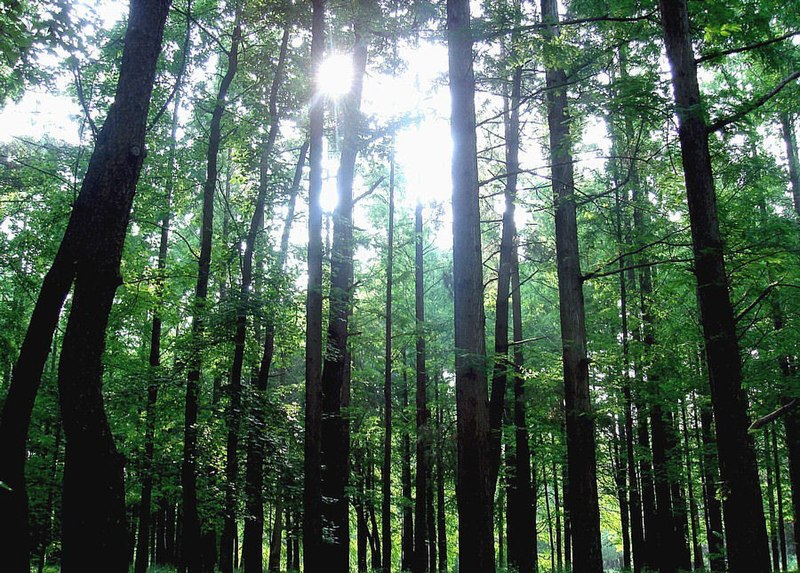
Wood is a vitally important natural resource. Sometimes people think that harvesting it is a bad thing; however, this is hardly the case. In fact, we are protecting and preserving that natural resource through responsible use. Wood is the only renewable construction material. Plastic and aluminum use up valuable nonrenewable natural resources. Ninety-five percent of every tree cut down is used to make products such as construction lumber, plywood, wood chips, and sawdust. Even the bark is used in landscaping. The remaining 5% is made up of branches left in the forest to biodegrade naturally and enrich the soil, helping saplings to grow.
Careful use of the forests, including selective cutting methods, helps to promote new tree growth, and increased sunlight allows for a greater diversity of species and their survival over time. When forests become old or overcrowded, trees stop growing and begin to decay. They release carbon dioxide that contributes to the greenhouse effect. Responsible harvesting of forests and reforestation lock in the carbon and ensures a continual supply of oxygen-producing trees. Reforestation actually removes carbon dioxide from the atmosphere and puts it somewhere else, like in the mass of a live, growing forest. This is a vital part of reducing carbon emissions, offsetting “carbon footprints” and providing time to transition to a clean energy economy.
Reforestation is the restocking of existing forests and woodlands, which have been depleted, with native tree stock. It can also refer to the process of restoring and recreating areas of woodlands or forest that once existed but were deforested or otherwise removed or destroyed at some point in time. Simply put, reforestation causes a forest to grow again. The resulting forest can provide both ecosystem and resource benefits and has the potential to become a major carbon sink (a natural carbon dioxide reservoir that removes carbon from the atmosphere and releases oxygen back into it).
Reforestation occurs by allowing a deforested land to be undisturbed for several years or by replanting native species in open areas or adjacent to the remaining forest. Native forests are resilient and may re-establish themselves quickly by letting nature take its own course. Pressure on forests can be relieved by creating tree farms for the sole purpose of harvesting them for sale or manufacture, such as in the wood flooring, pulp and paper industries. This method of replanting trees whenever some are cut down is similar to harvesting of other crops.
Reforestation can provided other benefits in addition to financial returns, including restoration of the soil, rejuvenation of local flora and fauna, and capturing and sequestering 38 tons of carbon dioxide per hectare per year. It also helps protect the natural habitats of some animal species and prevent shoreline erosion. So, ultimately, reforestation is very important, not only for the industry but also our environment.
Monday, August 4, 2008
Bamboo
| alternative flooring materials, bamboo flooring, eco-friendly, engineered wood flooring, environmentally friendly, hardwood species, renewable resource, wood, wood species Monday, August 4, 2008
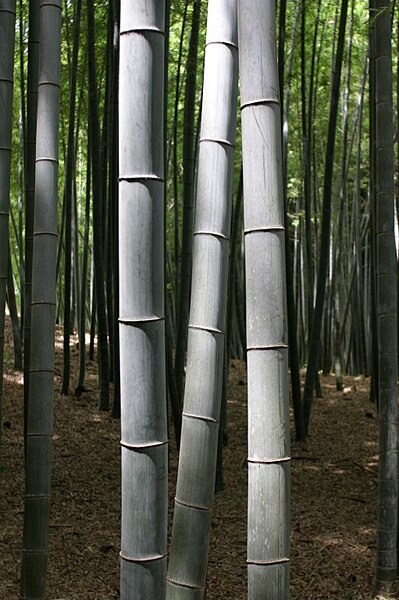
As one of nature’s most renewable gifts, bamboo has been used in many ways since the beginning of time. In modern times, it has become the wood of choice for making both decorative and practical items that are aesthetically pleasing as well as environmentally friendly. Bamboo will give you the natural beauty of hardwood flooring in your home without the detrimental effect on the environment. Bamboo is one of the hardest natural materials available for flooring use, and is an excellent alternative to tree wood, because of its extremely fast growth speed. Because bamboo is a rapid growing grass, and not wood, it can be harvested every 3-5 years, unlike 15-25 years for most tree wood, or up to 120 years for oak! Here are couple interesting facts about bamboo:
• It can also reach maximal growth rate exceeding one meter (40 inches) per hour for short periods of time
• 6 million people in China work in bamboo and 600 million people worldwide rely on income from it
Growth speed makes bamboo a very environmentally friendly product for flooring. When it’s harvested, it grows back – just like your lawn. But unlike your grass, bamboo is hard – 25% harder than red oak, but equally as strong. Bamboo is also blessed with colorful tones and distinctive grains. Such sustainability, strength and beauty are major reasons why bamboo has grown to become one of the most popular flooring choices in America.
Bamboo flooring is available in countless colors and styles, which will compliment any interior design. From ultra-contemporary chic, to a more traditional, classic style, natural bamboo flooring will give you a truly unique look.
With high sustainability and environmentally sound origins, bamboo flooring has become a great choice for those looking to decorate their homes or workplaces with the beauty of a wood floor while being environmentally conscious. Because of this, consumers are increasingly choosing to install bamboo flooring in place of traditional hardwood.
There is no question that bamboo is a renewable resource and has been recognized as a “green material.” Quoting Environmental Building News, “Environmentally, it’s hard to argue with a wood substitute that matures in three years, regenerates without need for replanting, and requires minimal fertilization or pesticides.”
Visit GateWoodFloors.com and check out our selection of bamboo. It’s one of the biggest selections you’ll find anywhere!
Friday, July 18, 2008
Contractor Responsibility
| buyer's guide, contractor, installation, wood Friday, July 18, 2008Hardwood flooring contractors work with a natural, infinitely variable, renewable product that has a warmth and beauty all its own.
This unique product can last a lifetime. What is the contractor’s role and responsibility when it comes to providing this lifetime product?
The contractor is obligated to know the product he is installing. He should be accountable for proper placement and installation, as well as the products requirements. Wood is a naturally dynamic and variable product, particularly sensitive to moisture. Each species, size, and construction type will react differently to moisture. A contractor should know the typical environmental conditions for the geographical area in which he is working, and how the flooring to be installed will react. A contractor should know if the product, as specified, is suitable for the intended use and application.
For example:
• A solid product should not be used below grade.
• A wide plank, or species with high expansion tendencies, should not be used with radiant floor heating or in areas with extreme moisture ranges.
• A close grained species, such as maple, should not be used with a dark stain finish.
• Flooring with a lot of character marks should not be used in a formal setting.
• Soft species should not be used in high traffic areas.
For acceptable product performance, and a long life, one should expect exceptional quality workmanship from his contractor. The contractor should also know what conditions are required for the flooring to produce the highest performance possible. Site conditions need to be evaluated, and inadequacies need to be discussed. This will allow the consumer to make the best decisions, and provide the best opportunity to have his or her expectations met.
All manufacturer’s installation instructions and applications should be followed, including using the appropriate tools and proper use of those tools. The contractor should know the specifics for each and every item. Contractors should not install a defective product.
Finally, and maybe most importantly, the contractor is responsible to produce quality work that will satisfy his customer.
As a consumer, do your research, and ask a lot of questions. The more knowledge you have, the more educated your decision will be. And in the end, you will have a hardwood floor that gives you a lifetime of pleasure.
For more information on getting the right floor and making it last, check out the Buyer’s guide at GateWoodFloors.com.